First target reached! Stretch target: £60,000
This will help continue the work of the 1000 Tyres Project, as Whelan's Reef Renewed...
Your donation unlocks match funding
Boost your impact
Your donation unlocks match funding
This will help continue the work of the 1000 Tyres Project, as Whelan's Reef Renewed...
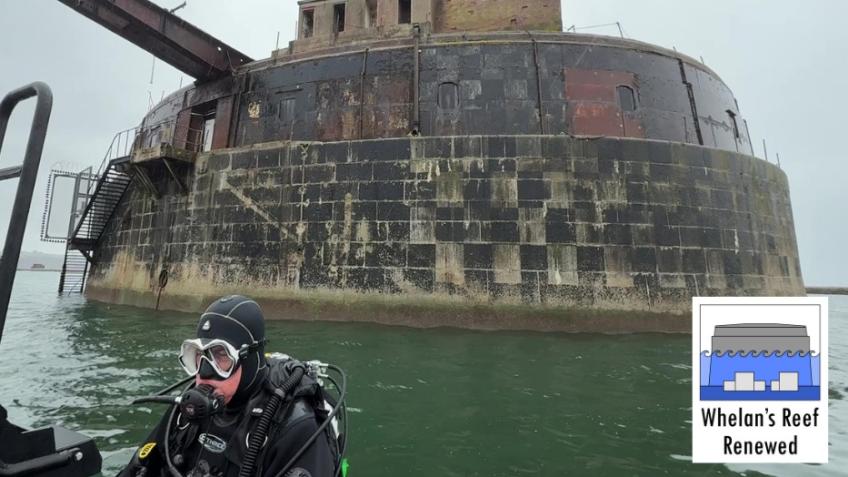
Whelan's Reef Renewed - Removing 50 tonnes of rubbish and replacing it with an artificial reef at the Breakwater Fort in Plymouth Sound

The 1000 Tyres Project aims to remove tyres and other marine litter from our marine environment, starting by cleaning up Plymouth Sound in Devon, UK. This project was started in 2020 by The SHIPS Project and has already removed more than 24 tonnes of rubbish from the seabed and foreshore. While looking for shipwrecks for another project, we found hundreds of tyres and other litter that had been dumped in the sea. Tyres pollute the sea by releasing large quantities of microplastics and leaching toxic chemicals into the water, so we decided to remove as many as we could. The SHIPS Crew (our volunteer team) do the clean-ups underwater and on the foreshore. We find the litter on the seabed using sonar. Then we identify it and record its location. All the work is done unpaid volunteers.
Whelan’s Reef Renewed
The SHIPS Project CIC, through their venture 1000 Tyres, would like to remove a large pile of tyres, scrap metal, plastic rope and lost fishing gear from the seabed close to the Breakwater Fort in Plymouth Sound. The pile was collected together in the 1980’s by trainees from POP Fort Bovisand, who used the Fort as a base for commercial diver training. The 50-tonne pile of marine litter became known at the time as ‘Whelan’s Reef’, even though it was never intended to be an artificial marine habitat.
You can read in-depth about Whelan's Reef Renewed here: https://www.1000tyres.org/whelansreef.html
Why Whelan’s?
There is an abundance of diverse marine life covering the Breakwater Fort and other structures on the seabed around the fort, including the steel CSWIP structure and Glaucus, an experimental undersea habitat also made of steel. The Fort stone walls and the steel structure show an abundance of life, while Whelan’s is virtually lifeless. By removing the marine litter and replacing it with an artificial reef, the marine habitat will flourish further, providing more real estate for colonies of protected pink sea fans which grow on the breakwater and are among the largest in the South West.
What will we be doing, and what are the Big Benefits?
1. We will remove a large pile of marine litter known as Whelan’s Reef.
2. To create a new marine habitat by deploying several ARC marine Reef cubes.
3. To study the development of a regenerated marine ecosystem.
4. To engage the public in a direct action project where improvements can be demonstrated.
5. To use the project as an opportunity to promote citizen science through participation.
Partners
ARC marine is pleased to support the vision of the Whelan's Reef project to combine the removal of historic marine litter with the creation of long-term marine habitat.
What gives us confidence in this approach is not theory, but local evidence. Just a few miles from the Breakwater Fort, the REFAS (Reef Enhancement for Fish and Shellfish) project in Torbay is now entering its fifth year. Delivered in comparable coastal conditions, REFAS has demonstrated how purpose-designed Reef cubes® can accelerate reef creation, providing the complex habitat needed to support diverse marine communities. Five years of ecological monitoring have recorded the continued development of native marine life, with 108 species identified and significantly higher biodiversity than surrounding control areas. Rather than remaining as isolated structures, the Reef cubes have become established living reef habitat.
The opportunity at Whelan's Reef is to apply those same Nature-Inclusive Design principles to a site that is currently performing below its ecological potential. By replacing a legacy source of marine litter with engineered habitat, this project has the potential to accelerate natural reef development and help the site recover towards the levels of biodiversity already demonstrated by the surrounding natural and artificial reef habitats.
We have been communicating with the seabed owners and working alongside the King’s Harbour Master concerning the concept and delivery of this project. We recently gave a presentation about the project to Tamar Estuaries Consultative Forum (TECF), who manage the site area, along with all of Plymouth Sound and Estuaries, which are a Marine Protected Area. We are moving forward with the help of TECF to further discuss the project with local and national stakeholders.
Coping with Climate Change
The ocean is our greatest ally against climate change. But to combat climate impacts, we must protect our marine ecosystems and increase available habitat areas. Polluting rubbish in the waters and on the seabed is inhospitable to many marine species. By cleaning up these areas, we have an opportunity to build resilience to the impacts of climate change. By cleaning up the seabed, we create more space for species to flourish.
Marine life thrives when it has no stressors, when there is nothing holding it back. We know two things that stress marine life: pollution and a changing environment. We know the environment is changing, with habitat loss and rising water temperatures. We have seen these changes first-hand in Plymouth Sound; while diving in July, we recorded the highest underwater temperature we have ever seen: 21 degrees Celsius. So, we now need to remove as many pollutants as possible and as soon as possible, to give the marine life the best chance it has at adapting to climate change.
The artificial reef will increase carbon capture in Plymouth Sound as a preventive measure against the impacts of climate change, helping coastal communities around the Sound and estuaries by increasing local biomass.
Creating the artificial reef and statue park is an engagement point which connects people with the sea. It gets people into the water so they can appreciate the surroundings. Encouraging sports that cool you down and has a small carbon footprint offers a double benefit: an artificial reef that provides new habitats, and encourages a sport that cools you down with temperatures rising in the UK because of Climate Change.
Step 1: Removal
1. Undertake a pre-disturbance survey of the reef and the extant marine life.
2. Lift and recover from the seabed the scrap metal, tyres and other man-made objects that compose Whelan’s Reef.
3. Transport the material to an agreed location on shore where it can be transferred to a handling site at the Greenergy Oil terminal in Cattedown, Plymouth, for recycling.
Step 2: Remediation
1. Undertake a baseline survey of the seabed and its marine life.
2. Install several concrete ARC Marine Reef cubes
3. Periodically monitor the ecological recovery at the site.
4. Commission a statue of Scylla made of suitable concrete and deploy it on the site.
Statue of Scylla – Ancient Maritime History of Plymouth
In addition to renewing an area of seabed in Plymouth Sound, we want to have, alongside the blocks, the start of an underwater statue park, beginning with a statue of Scylla. This statue is inspired by the statue of Scylla recovered in the 1970s off Rame Head by local divers. We don't know where the statue ended up; the only photo we have is the one pictured here, which we will use as inspiration for the new underwater statue. We know Plymouth is an ancient port, and this ancient object is a testament to that history. The production of this new statue alongside the artificial reef is an exciting feature that divers and snorkellers alike will want to visit.
Why will we be successful?
The SHIPS Project has a track record of successfully accomplishing large-scale, unique and difficult projects since 1994. Projects include The 1000 Tyres Project, sinking the Pilot Cutter Tavy, the second artificial reef sunk in Plymouth Sound, survey management for The Mary Rose, The A7 Submarine Project, to name a few. The SHIPS Project team has over 60 years of combined experience in marine planning, maritime heritage, dive operations, training for underwater cultural heritage, underwater mapping and marine geophysics. Our team consists of chartered engineers, maritime archaeologists and marine technologists. We are not only qualified but also experienced.
Cleaning up Plymouth Sound National Marine Park
More importantly, what have we achieved….
• We have recovered 572 tyres so far!
• We have removed 24 tonnes of rubbish from our seas and rivers!
• We have brought awareness to the problems of discarded tyres and other junk dumped in the sea and on the foreshore.
• Working with local industry, we have identified a method of recycling the tyres into a marine-grade biofuel.
• We have provided education and information to help reduce the amount of v new dumping.
• We have involved the people of Plymouth in a great environmental project.
• We have engaged the local sport diving community in an underwater project that benefits themselves, the marine environment and our underwater heritage.
• We have mapped 60% of Plymouth Sound so far, and aim to complete the survey soon.
How did we find the tyres and other junk?
We found lots of tyres while doing sonar surveys in Plymouth Sound looking for shipwrecks, with the help of Sonardyne International Ltd. , Wavefront Systems Ltd. and the University of Plymouth hydrography. Find out more on the page about Searching for Tyres
Why are you recovering tyres when they are homes for crabs and lobsters?
Tyres are dumped rubbish that doesn't belong in the sea, and only now are we learning about the effects of the toxic chemicals and microplastics they produce. Yes they can be a home for lobsters, but chemical oil drums can be a home for wildlife on land, and we don't leave them in the environment for the same reasons.
Where did the tyres come from?
There have been many tyres lost in Plymouth Sound over the years, some of the lost tyres were fenders that fell off ships while others were deliberately dumped in the sea and rivers..
What makes tyres a pollutant?
Most tyres that end up in the sea are already old and well used. After a time underwater the tyres start to break down and produce microplastics and release harmful chemicals into the sea.
Why Pledge?
Plymouth City Council provided £15,000 of match funding

Communities Fund provided £8,635 of match funding

Communities Fund Employee Giving provided £880 of match funding
Funding method
All or nothing – this project will only receive pledges if it reaches its target of £30,000 by 28th October 2026 at 11:59pm