Always on
This project successfully funded on 18th June 2026, you can still support them with a donation.
This project successfully funded on 18th June 2026, you can still support them with a donation.
Print additional copies of the book.
The aim is to raise money to publish this photo book about our lockdown. Please donate £30 for the book check postage below.
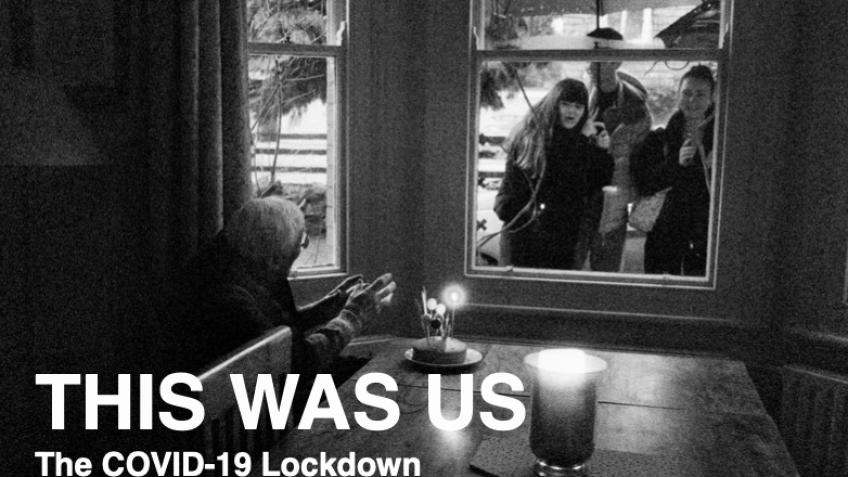
In 2020 England went into a lockdown that was to change the lives of many people. We did not really know what to expect or what it would mean. A few photographers recognised they had a responsibility to document what was happening in this new reality. It is 6 years since the first lockdown hit us and now the time is right to look back on what was a very strange part of our social history.
This Was Us is a story in pictures of that period, seen through the eyes of some astute and remarkable photographers. As the COVID Inquiry seeks to conclude its investigations, this book stands as a testimony to all who suffered losses of loved ones or who have had their lives changed in ways they are still finding it difficult to understand.
At the start of the lockdown, everywhere became deserted leaving the homeless to keep each other company in their loneliness. Roads emptied except for delivery vehicles. The skies became the province of the birds again as aircraft were grounded. Life seemed to have vanished. The sun blazed down in an unusually dry April. Clouds disappeared along with vapour trails. The wind rustled through the branches of trees as the buds began to burst into new leaves and an eerie quiet rested on us.
Fourteen photographers have contributed to this important record by sharing their work and their memories in their own words. Their photographs span the period leading up to the first lockdown and through the subsequent two lockdowns during the year and a half that followed. Each photographer tackled a different aspect of the pandemic, collectively creating a powerful and sometimes moving tribute.

Picture by Ruth Toda-Nation
The Photographers
Andrew Moore, Barry Lewis, JJ Waller, David Sládek, Ed Sykes, David Collyer, Alys Tomlinson, Bex Day, J. A. Mortram, Ruth Toda-Nation, Olivia Harris, Alan O’Connor, Kieran Doherty and David Gilbert Wright.
Each photographer is represented by an average of 11 images – a total of over 150 photographs with accompanying text and their biographies. There will also be a foreword by Daniel Meadows, an introduction by David Gilbert Wright and Ruth Toda-Nation and a glossary of terms used during the Pandemic.
This story begins nearly two decades earlier when Andrew Moore was assigned to cover the COVID-1 outbreak in Hong Kong. Our experiences suddenly resonate with his photographs showing people in HASCHEM suits and passengers on trains wearing masks.
Picture by Andrew Moore
Rumours about the pandemic began spreading around Christmas time, 2019 and then the order came for everybody to go home, and the lockdown began in March. Barry Lewis recognised the eerie difference created as the streets emptied and recorded some of our most famous London landmarks devoid of people.
Picture of a masked figure passing billboard in Clapton by Barry Lewis
Picture by JJ Waller
JJ Waller worked on a project during the first lockdown that involved making portraits of people at the windows of their homes. He managed to gain the trust and confidence of people of all ages who were locked down. The photographs portray the individuals in such a way that they appear trapped behind glass. For many, they remarked that JJ was the first person outside of their families that they had spoken to for months.
David Collyer worked in a hospital and quickly noticed the extreme pressure staff were coming under. He was given permission to make a unique record of life in an NHS hospital that was stretched to breaking point. The photographs he produced give us an insider’s view what they were going through. Many found photographers found it difficult to work during the first lockdown so there were only a handful who produced credible and authentic documentary pictures.
Picture by David Collyer
Ed Sykes made a haunting set of photographs that represented how people felt through the darkness of the London streets. Using Infra-Red film and monotone printing, his Icy-blue pictures capture the isolation that was being imposed on us all.
Picture by Ed Sykes
Bex Day could see that the experiences of school-age children were changing and conducted her own research. She asked the youngsters to write down their thoughts in their own words. The original handwritten accounts appear in this book together with the portraits she made of them.
Picture by Bex Day
Alys Tomlinson photographed young people whose proms and end of year celebrations had been cancelled due to the COVID19 pandemic. Instead of being in the usual settings of school halls or hotel function rooms, she captured the young people all dressed up in their gardens, backyards and local parks. The portraits illustrate the poignancy of a lost summer for teenagers who were unable to mark this significant step in growing up and leaving school. The images represent a loss and longing.
Picture by Alys Tomlinson
As the days turned into weeks and the skies cleared of pollution and the sun beat down many began settling into new lives working from home. People learned to find ways to occupy themselves over hedges, across walls and in gardens. Olivia Harris managed to document many of these moments, providing a fascinating record of how we amused ourselves. Her richly colourful photographs of East London life contrast starkly with the story of a disabled man of 50, who found himself locked down and homeless.
Picture by Olivia Harris
David Gilbert Wright used his daily exercise to visit Paul at his camp in the woods. He spent many hours talking to Paul who opened up to him about his feelings of loneliness and despair. Paul’s story is one that many homeless people would probably recognise as they too found themselves all alone as the towns and cities emptied.
Picture by David Gilbert Wright
Picture by Jim Mortram
Perhaps the two most saddening stories are about the experiences of older people. Ruth Toda-Nation’s father was in sheltered housing. Her story is about the relationship that grew between her father and Mary. They lived in rooms next to each other and Ruth takes us through the difficulties of isolation, separation and eventually death.
Picture by Ruth Today-Nation
Kieran Doherty shows us something different as he recounts how shielding became a means of defence for his elderly parents. His pictures show us the daily routines and events his mother and father went through that might have been done by others including cutting hair and cleaning. Pictures of normal everyday occurrences made unusual through the circumstances of the time.
Picture by Kieran Docherty
As the months moved towards the Christmas of 2020, some became frustrated by the restrictions and laws. David Gilbert Wright’s pictures of a Rosary Protest by Traditional Roman Catholics highlighted the closure of churches, something that had not happened before even during the great plagues of London. And David Sládek’s photographs are poignant in how protestors were being treated.
Picture by David Gilbert Wright
Picture by David Sládek
The photo stories close with perhaps two immersive sets about death and grief. Alan O’Connor’s story begins with the birth of his daughter just before the lockdown and progresses into how his Mother-in-Law is diagnosed with Cancer and passes away soon after. It highlights having to deal with loss, away from all the usual support that we rely on at such times. David Gilbert Wright had a similar story to tell when he lost his father in April 2020. At that time the number of people who could attend a funeral was severely limited to just ten. Everyone had to remain two metres apart. David decided to photograph his own father’s funeral as a way of coming to terms with his loss. It is a deeply personal series of photographs involving only some his immediate family. His sister lived in America and was not permitted to travel to England, so she missed out.
Picture by David Gilbert Wright
The story told in This Was Us is a an emotional one. For some of the photographers, it angered as well as saddened. Hopefully, it will help heal and close the wounds, allowing us to move on. What is clear is their work provides a unique insight into our social history.
Picture by Alan O'Connor
The Book
This Was Us will be published initially as a limited-edition hardback book. If it sells out a softcover book may follow.
The book will be landscape – 300mm x 230mm approximately with 196 pages.
David Wright is a co-founder of the f8 Documentary Magazine and publisher of f8 Books, all with an emphasis on British social documentary photography. He is a photographer himself with nearly 50 years of experience. Other projects by this creator include the f8 magazine - all copies up to number 22 sold out, Coal Faces – funded and published in 2024, India and Nepal in the 1980s – Funded and published in March 2026, Rural Ireland in the 1980s and 1990s – all currently available.
Funding method
Keep what you raise – this project will receive all pledges made