The World Of Wonderfill
Ashby-de-la-Zouch, Leicestershire, United Kingdom
Crowdfunder is secure
Your payment details are protected
Aim
Turning the World of Wonderfill characters into plush toys and picture books so young children can hold their feelings, not just hear them.
Your child has big emotions. Do they have the words for them?
Most of us were never taught. We learned to say "fine", "happy" and "sad", and then we spent our adult lives trying to work out what was actually going on inside us.
The World of Wonderfill gives children something better, from the very start: a language for their emotions, taught the way children learn best, through characters, story and play. This year it reached 850 children across 7 settings in South Yorkshire. Teachers told us the children are naming their feelings more confidently and with a wider vocabulary. Four-year-olds are telling us that love is an emotion, and that an emotion doesn't always stay.
Now we want to take the characters out of the story and put them into children's hands. We are raising £15,000 to develop soft plush Wonderfill characters and the next series of illustrated storybooks, and to give them to the nurseries and schools we work with.
Here is why, and how it started.
Where this began
I'm Hannah, founder of Mind Wellbeing, a mum, and the person who wrote the World of Wonderfill.
In 2019 I reached a crisis point. What I noticed while I was in it was that the words we use for matters of the mind made it worse. "Mental health" was a phrase I only reached for when things had already gone wrong, and the word "mental" carried a stigma that weighed me down with shame and fear at exactly the moment I needed to feel none of it.
As I started to heal, one question wouldn't leave me alone: if we change our words, can we change our world?
Being a mum sharpened it. I could see my own children growing up with the same missing piece I'd had: no education of self, no understanding of emotions, mind and language that any curriculum ever gave them. I didn't want them to wait until adulthood, and a crisis, to learn what I had learned the hard way.
So I went back to study, trained as a child trauma and behavioural therapeutic practitioner, and built something for children that starts before problems take root. That something became the World of Wonderfill.
What the World of Wonderfill is
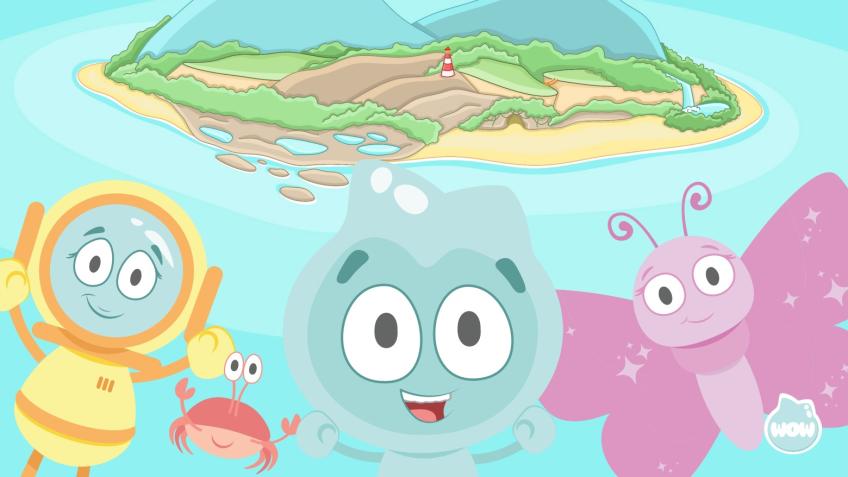
Wonderfill is a story world where emotions are characters, colours and sensations rather than problems. Children meet Wonderfill, Mindful Marvel and Imogen, and through the stories they learn something most adults never quite manage:
Emotions are energy in motion. They move through us. They are not who we are.
A child who has met Wonderfill can tell you that sadness feels "heavy", that love feels "warm inside and safe", and that a feeling doesn't have to stay. They have breathing exercises they reach for on their own. They have words for what their friend is feeling, not just themselves.
In practice it is short, story-based sessions in nurseries and primary classrooms for children aged 3 to 7, with simple daily routines, movement and breathing built in, and it fits inside the school day with no extra workload for teachers. Our partner nursery, Little Learners in Doncaster, has taken it younger still, to children from age one.
"The initiative has had a significant positive impact across the nursery... Those who previously struggled with anxiety or behavioural regulation now confidently apply coping strategies in the moment."
Doncaster Free Press, on Little Learners nursery
What happened this year
In 2025-26 the World of Wonderfill reached:
- 850 children across 7 nurseries and schools
- 25 classrooms, 16 of which delivered the full weekly curriculum
- 384 lessons delivered in full, 8,064 hours of shared emotional learning
- 9 extra classrooms who joined beyond the target age because they saw what it was doing
Several schools have now embedded Wonderfill as a multi-year journey, adding a year group each year. Emotional development doesn't happen in a single school year, and neither does Wonderfill.
The programme was independently evaluated by researchers at University Campus Doncaster (DN Colleges Group) across a full academic year, following 18 children in depth across 3 schools. The headline finding was a clear developmental journey: across the year, children's understanding matured from "joy is who I'm with" to emotions as states that come and go.
All 3 teachers in the study would recommend the programme. Every one of them felt confident delivering it.
"The children are using a wider range of vocabulary related to an emotion."
Teacher
"Love is an emotion. An emotion doesn't always stay. It can go away."
Two children, aged 4 to 7
I want to be honest with you about the size of that evidence, because trust is built the same way wellbeing is: slowly, gently and with care. These are first-year findings from small pilot cohorts. They are early and encouraging, not conclusive. We report counts rather than percentages, and we say what was observed rather than what we hoped for. We would rather earn your trust than claim certainty we haven't yet demonstrated.
Why plush toys and books, and why now
Our evaluation taught us one thing above all the others.
Children internalised the emotional learning. But they didn't always carry the characters into their own play, on their own, once the session ended. The learning was real, but it stayed in the room where it was learned. Emotional learning needs objects, artefacts and touchstones to travel.
Any parent knows this already. A child doesn't process a hard day by discussing it. They process it through a teddy. They tell the teddy what happened. They make the teddy feel brave. The object is how the feeling gets handled.
So the next step for Wonderfill is to make the characters real. A soft plush [character] that a three-year-old can hold when the feeling is too big to say. A new series of picture books, properly illustrated, that a nursery can read at story time and a family can read at bedtime, so the same words are used at home and at school. Two generations, one shared language.
This matters most for the youngest children. A one-year-old at Little Learners can't sit through a lesson. But they can hold something soft, hear a name, and start to learn that the wobbly feeling in their tummy has a friend.
What your pledge pays for
We are raising [£target]. Every pound goes into product development and getting the finished resources into the nurseries and schools we work with, not into overheads.
- Plush character development · [£ ] Design, safety testing to UK toy standards, prototyping and the first production run of soft Wonderfill characters.
- The next series of storybooks · [£ ] Professional illustration and print of the next [number] Wonderfill titles, tiered by developmental stage from age one upward.
- Classroom sets for our settings · [£ ] Character and book sets given directly to the [number] nurseries and schools currently running Wonderfill, so every child in the programme has the resources, not just the schools that can afford them.
- Strengthening the evidence · [£ ] Continuing our independent evaluation so we can show what the resources do, and publish it.
If we go past the target, the next thing on the list is a Champion toolkit for the adults: emotion wheels and conversation cards so parents and staff can carry the same language home.
Who is behind this
Mind Wellbeing is a small South Yorkshire organisation with big partners behind it. The Carr Fenton Foundation is our founding partner, and Wonderfill runs through its nursery teams. Stride Yorkshire, a neurodiversity support organisation, are our Champion partners and are training their own team in the approach. Our research is carried out independently by University Campus Doncaster.
I hold an advanced DBS check and am a licensed Child Trauma and Behavioural Therapeutic Practitioner (Thrive), a Family Thrive Course Leader, a Designated Safeguarding Lead (Level 3) and a Mental Health First Aider. I say this not to impress you, but because if you are a parent, you should know who is writing the stories your child is hearing.
"The parent training is truly fantastic, and has opened me up to the changes required in the words and language we use to our children."
Parent
How you can help
There are three ways, and none of them is small.
- Pledge. Whatever you can. Every pledge puts a character into a child's hands.
- Share. Send this page to one parent, one teacher or one nursery you know. Most of our growth has come from a teacher telling another teacher.
- Ask your child's school. If you would like Wonderfill in your child's nursery or school, tell them about us. We would love to talk to them.
Let's keep changing our words
I didn't have the words when I needed them most. I want your child to have them before they ever need them.
When we change our words, we change our world. Thank you for helping us give the next generation better ones.
Hannah Dunn
Founder, Mind Wellbeing · mindwellbeing.co.uk
Funding method
Keep what you raise – this project will receive all pledges made by 16th November 2026 at 3:45pm