Target reached!
You can help this project to raise more and reach its stretch target.
You can help this project to raise more and reach its stretch target.
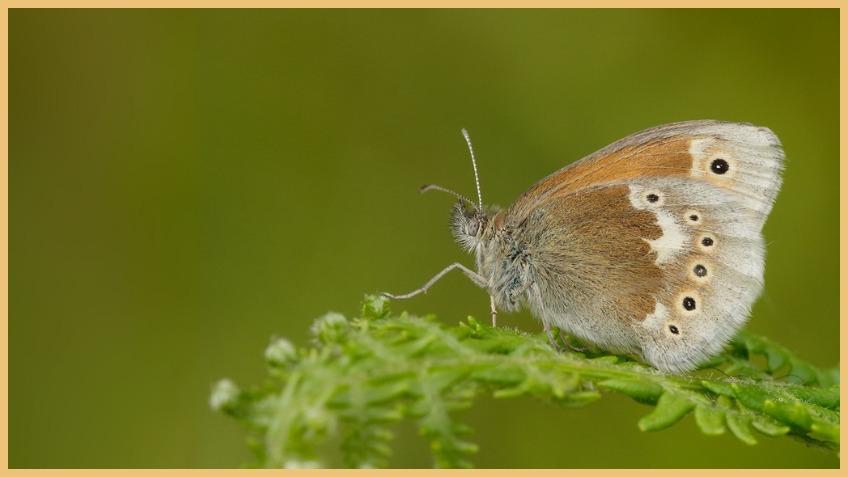
Support conservation work for the Large Heath butterfly, to help this beautiful bog-dweller thrive in peatlands across the UK.
Scattered across the UK, the Large Heath is an unassuming, yet beautiful butterfly. Restricted to wet habitats, these bog dwellers have seen their numbers plummet in the last 30 years, particularly in England and Wales. Sadly, climate change is causing changes to the delicate, damp habitats the Large Heath calls home, pushing this butterfly towards the brink.
We need your help to carry out vital research into this now endangered species, to discover how to halt their decline in England and Wales.
We have secured funding to deliver two new incredible conservation projects across England and Wales in the coming years that will benefit the Large Heath. However, we have not yet raised the full amount needed. Your kind support today will help to make these projects a reality, and create a resilient future for the Large Heath.

In the last few years, thanks to support from butterfly and moth champions just like you, we have surveyed more than 30 sites in England for the Large Heath. In Scotland where populations are currently small but stable, our ‘Bog Squad’ have been working hard to protect and restore peatland. A habitat that the Large Heath relies on.
Building on learnings from this previous work, we hope that one of the key outcomes of these two new projects will be a better understanding on how land is managed for the Large Heath. This will allow us to provide key recommendations to landowners on how to manage their habitats for this butterfly.
Peatland is a difficult terrain to navigate and with your support we will be able to equip our volunteers with specialised tools such as drones, which will enable them to carry out large scale habitat assessment using aerial photography. Helping us plan safe routes and causing as little disturbance as we can to the habitat.
We are at a turning point, with peatland restoration being recognised as pivotal in supporting the UK’s biodiversity, and regulating the climate. By acting now, there is significant opportunity to provide evidence and share our findings to support conservation work happening across the UK.
The Large Heath is restricted to wet, boggy habitats in northern Britain, Ireland and a few isolated sites in Wales and central England.
There is one generation a year with adults flying between mid to late June and early August, with a peak in mid-July. However, the precise dates vary considerably with altitude and latitude, and the butterfly can fly up to a month later in the mountains of north Scotland.
The eggs are laid singly, usually on dead cottongrass. The larvae feed during the day on leaves of the food plant from late July to late September. They hibernate low down in the vegetation while still small and emerge in March to continue feeding.
The butterfly’s main foodplant is Hare's-tail Cottongrass Eriophorum vaginatum, although females select areas for egg laying with mixed species rich swards of variable height rather than areas completely dominated by large, lush tussocks of the foodplant.
This project successfully funded on 8th September 2025