Target reached!
Every additional penny raised will enable us to do more to raise awareness of butter...
Every additional penny raised will enable us to do more to raise awareness of butter...
Help save Britain’s most endangered species from extinction by donating to improve a vital landscape, and support vulnerable people too.
Help us save four of Britain’s most endangered species from extinction by donating to improve one of the most important landscapes for them.
Morecambe Bay is an area of critical importance – it has a greater number of threatened species than any other landscape in northern England.
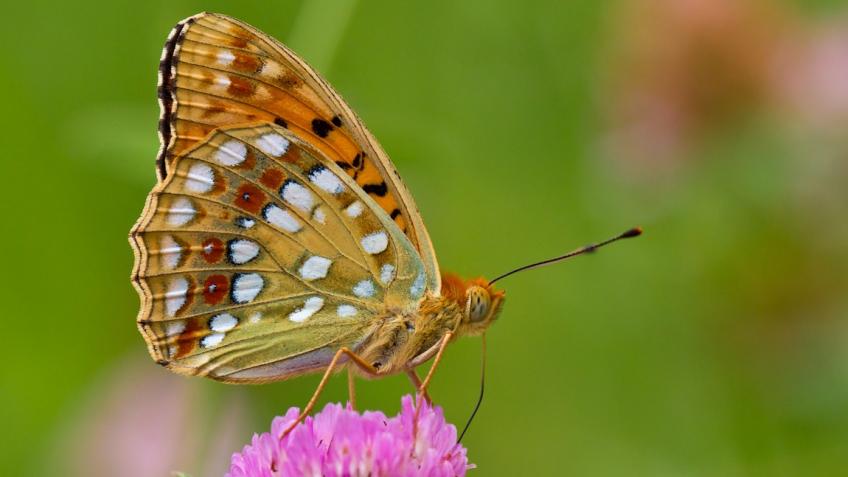
It is a national stronghold for Britain’s most endangered species, the High Brown Fritillary, and is also a regional stronghold for the Pearl-bordered Fritillary, our second most endangered species.
Butterfly Conservation has begun a major new project – the Morecambe Bay’s Woodlands project – to promote the recovery of these species, plus the rare Duke of Burgundy and the White-spotted Sable moth. This urgently needed conservation work focuses on innovative and sustainable habitat management.
However, this project is facing a financial shortfall of £12,000 and we urgently need to raise these additional funds to ensure all work can be carried out.
Please donate today to help protect these precious species from extinction.
We also have aspirations to help locals living in fuel poverty by developing a new community wood fuel groups who will collect, process and distribute logs to those most in need.
By donating today, you can make a real difference to both vulnerable people and species.

If you make this work possible, other struggling species will also benefit including: Small Pearl-bordered Fritillary, White-letter Hairstreak, Northern Brown Argus, Barred Tooth-striped moth, Dingy Skipper, Grayling and Small Heath. The proposed conservation measures are also beneficial for other wildlife including the Marsh Tit and Dormouse.
Without your support for this critical conservation action, there is a real risk of these species declining even further in the area or disappearing altogether.
Please donate today to protect these species from extinction and help vulnerable people better connect with nature to help their health.
This project has been part-funded by the Green Recovery Challenge Fund, which is funded by Defra and delivered by The National Lottery Heritage Fund in partnership with Natural England and the Environment Agency.
Britain’s most endangered butterfly, the High Brown butterfly has undergone a dramatic decline - its distribution trend since the 1970s is -96%.
It is now reduced to around 50 sites where conservationists are working to save it from extinction.
Morecambe Bay is one of the few remaining strongholds. In 2007, the butterfly had been recorded on 65 sites in the area but only 50 of which were still occupied in 2010 (23% loss) and several have declined since.
Britain’s second most threatened butterfly having declined rapidly in recent decades. Its distribution trend since the 1970s is -95%.
Only 140 English colonies remain, with 85 becoming extinct since 1997 – a 38% loss.
By 2007, the Pearl-bordered Fritillary had been recorded on 44 Morecambe Bay Limestones sites, but by 2010 it was only recorded on 16 of these sites – a 64% loss.
The subject of intense conservation efforts, this highly threatened species has declined substantially in recent decades, especially in woodlands where it is reduced to fewer than 20 sites. Its distribution trend since the 1970s in Britain is -84%.
It is found in England only, with just four colonies remaining in Morecambe Bay.
Morecambe Bay is a national stronghold for this rare and threatened species and is therefore a key focus for conservation efforts to prevent extinction.
By 2012, the moth had been recorded from only nine Morecambe Bay Limestone sites although recent woodland management has facilitated further spread and numerical increase. More work needs to be done to increase its spread and stability further.
This project successfully funded on 27th May 2021