Target reached!
You can help this project to raise more and reach its stretch target.
You can help this project to raise more and reach its stretch target.
With your help Butterfly Conservation can create resilient landscapes across the UK, where butterflies and moths can thrive and survive.
2024 was a challenging year for butterflies and moths. With the results of the Big Butterfly Count showing an alarming decline in common garden species. Butterfly Conservation then declared a Butterfly Emergency.
It is not just our garden species that struggled last year. Many of our specialist butterflies and moths require very specific landscapes to survive, and their decline is an alarm bell ringing for UK wildlife. We need your support today to protect these unique, fragile butterflies and moths.
Right now we are planning an exciting new phase of landscape scale restoration projects, and your donation could help us make a bigger impact, protecting critical habitats for some of the UK’s rarest butterflies and moths.
Through years of conservation work we now know it is best to concentrate our conservation efforts on multiple sites, creating stepping stones fairly close together, rather than on single isolated sites. This not only allows colonies to expand, but creates resilience in the landscape allowing colonies to move when faced with extreme weather events such as flooding or drought.
Some of our most beautiful and iconic butterflies and moths breed and feed on just one or two types of plants in very particular places – they are habitat specialists which are under threat from climate and land use change. Loss of these foodplants through habitat loss and changes in land management across the UK have driven several of these colonies to the brink.
The Kentish Glory moth is now extinct in England, and only four populations survive in Scotland. This iconic species needs a steady supply of young birch trees lower than 2.5m tall, for the females to lay their eggs upon. With overgrazing by stock and deer in suitable habitats, these birch saplings are not becoming established enough to provide the conditions needed for breeding. As a result the remaining populations of Kentish Glory moth are now threatened.
The good news is that change can be achieved. When habitat restoration is delivered on a large, landscape scale to create a resilient landscape, butterflies and moths respond.

Butterfly Conservation has over 50 years of conservation experience and is ready to undertake these challenges, but we need your support today to achieve this.
In Kent, our work over 15 years with foresters and farmers has helped to stabilize crashing populations of the Duke of Burgundy and Black-veined Moth. Both species have now broken out of the tiny network of protected sites they were once restricted to, and are thriving in restored grasslands managed by a network of farmers supported by Natural England. We work with partners across the UK to help restore habitats and demonstrate that even threatened species can come back from the brink in resilient landscapes.
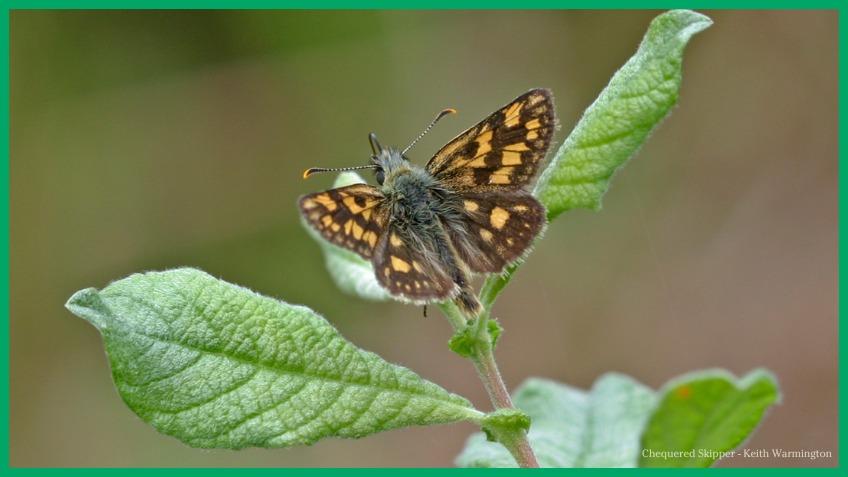
Butterfly Conservation have proven that when we work at a big scale, we see species recover and thrive. When the Chequered Skipper went extinct in England, it was successfully reintroduced into Rockingham forest in Northamptonshire. Success stories like this can only continue with your support.
With your help today, we can begin to plan new work across the UK, working side by side with landowners to give advice and share our knowledge. By making these important partnerships we can increase our reach across the UK. Helping species such as the Marsh Carpet moth to be resilient to the threat of flooding that is seeing their population decline.
Please make a donation today and help create resilient landscapes, allowing butterflies and moths to survive and thrive!
Donations to this appeal will support our work across the UK.
This project successfully funded on 5th March 2025