Rescue Phrynobatrachus irangi
Irangi
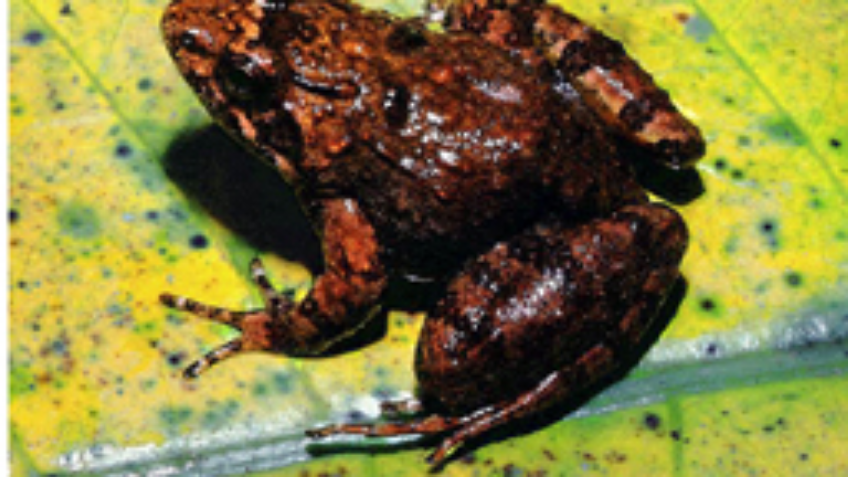
Aim
This remaining mountain amphibian, critically endangered could be extinct globally; Through establishment of insitu facility, can be saved.
Project aim
This remaining mountain amphibian, critically endangered could be extinct globally; Through establishment of insitu facility, can be saved.
About the project
The Direction
This project involves the community in the conservation of the most threatened amphibian species in Kenya. The project recognizes the need for a holistic development and sustainability of the environment. As thousands of people seek to steer development, the extinction of Phrynobatrachus irangi frog can only be compared to a lifestyle disease (for it is as a result of the good thing of development and the prosperity of the community). The whole world is rising to control these disease, and so shall we by engaging the community respond to the extinction of this important species. Through community involvement and strategic awareness creation, participation to conservation will be achieved and open way for ExSitu Facility.
The Species
Phrynobatrachus Irangi is currently known from only two montane localities in Kenya: Irangi Forest on the south-eastern slopes of Mount Kenya; and Kimande on the south-eastern slopes of the Aberdare Mountains. It probably occurs a little more widely in the Kenyan highlands (at least on Mount Kenya and the Aberdare Mountains). Its currently known altitudinal range is approximately 1,900-2,300m asl. Irangi Frog appears to be a diurnal species. Males have been found calling on the banks of small streams in montane forest, from under roots or logs, and from holes in the mud. It is probably dependent upon montane forest for its survival. It possibly reproduces in streams, although this requires confirmation. It is possible that the Kimande population is now extinct because of severe modification of the native habitat by local subsistence farming. This is also likely to be a threat to the species elsewhere in its range. Although not recorded from Mount Kenya and the Aberdares National Parks, it is possible that it does occur there, but further survey work is needed to better understand the distribution of this species in the Kenyan highlands.
Objectives
The main objective of this project is to empower the community to carry out projects that lead to the conservation of the Irangi Frog and in the identified habitats.
The Following are the specific objectives:
1. To build the capacity of the local community with emphasis on education and dissemination of knowledge to the community, schools and publications.
2. To conduct field studies and Continuous research based behavioral studies and developmental issues of the amphibians to identify and build basis for the project.
3. To engage the the community in innovative efforts to address the mitigation of the threats by setting up new breeding sites and in situ facilities.
4. To ensure adequate project management, Monitoring, evaluation, reporting and documentation, publication and dissemination of various project finding to enhance conservation knowledge of the local community and in the international domain.
5. To lay the foundation for further conservation efforts including establishment of an exsitu facility for sustainability of these species. The above objectives are most suitable because while these species are still being observed in the localities, its upon the community to set up their own intrinsic measure to conserve the species and avoid Extinction.
Activities and Relevance
Activity
How Would It Contribute?
1
Workshops and Forums
Participation of the community
2
Publication and Awareness creation material
Conservation awareness and reduced Degradation
3
Field Visits and surveys
Assessing the state
4
Setting up Insitu facilities
Breeding and increased Population
5
Collection of Data
Understanding the Situation further
6
Writing Reports and Documents
Dissemination of Information
7
Focus group discussions
Mobilising of Stakeholders
Sustainability
There are plans to scale up this project. The result will been disseminated to all relevant bodies and published in public domains for any interested persons to take action. There are two possible scenarios; one if the species are very endangered and demands conservation exsitu, the project will shift to this direction. Further if the condition has been improved in the recent past, then the capacity which the project has vested in the community will be depended upon for sustainability. But one thing, the battle for environmental conservation does not stop here; The project is just a beginning
This project closed unsuccessfully on 5th December 2015