Renovation of Cabman's shelter to art gallery/cafe
London, England, United Kingdom
Aim
To save and renovate a derelict Cabman's shelter to be used as a project space for international art and as a place to get a hot cup of tea!
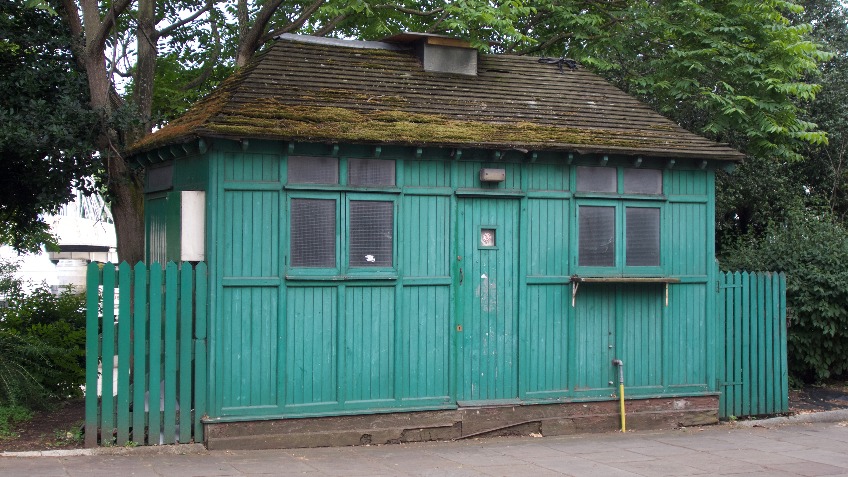
Hi, I have set up this crowd funder to be able to raise the funds to restore and revitalise one of London's 13 last surviving green cab shelters. It is currently unused and on the edge of dereliction and restoring it will enable it to become something really exciting and different: A new micro-project space for international contemporary visual art where both cabbies and the public can be refreshed.
Hi my name is Nina Coulson, I am an independent artist and curator and co-founder/ director of MOVEMENT an artist-led micro gallery in what was a disused former gents toilet on Platform 2 of Worcester Foregate Street Railway Station, UK.
On the bus from Victoria Station to Battersea, I passed by a little green hut, just by Albert Bridge. At first I thought it was for a gardener, a parkie hut for the embankment. After a while I realised it was unused and set about trying to find out who to communicate with regarding its potential as a project space. I looked around a bit and found out it was a ” Cabmans Shelter” made for Hansom Cab Drivers in the days of Horses and Carts, a place to get shelter and sustenance. The hut has been out of action for several years, as there is only one cabby rank next to it and it is situated on double red lines, meaning that cab drivers are unable to stop there at any time. This made it difficult for previous tenants to sustain enough business in its traditional use as a refreshment hut. However as a contemporary art project space its former use and location are ideal, its interior will be cleverly re-designed in a modular fashion. The cabby hut is situated on the picturesque Chelsea embankment on the Thames, right next to Albert Bridge and just a short walk over the river bridge is the the Royal College of Art Campus (Battersea) which will provide the project with a wealth of energy, audience and educational expertise in the arts sector. I proposed the idea that MOVEMENT renovate and the new use to the trustees of the Cabmans Shelter Trust and arranged a (6 am Sunday Morning) meeting in late 2017 with the Jimmy Jenkins, who manages the shelters, who has since given the project the green light! I have since visited the shelter multiple times, as keyholder, to measure up, condition check and assess what work needs to be done to restore the shelter and aim to kickstart the renovation process by shoring up the space and holding a series of artist and student -led events in the shelter in June/July 2020.
I have experience project managing a similar size project to completion. In 2006- 2010 i initiated fundraising and project managed renovations at MOVEMENT, taking it from from dereliction into public space. MOVEMENT's work on the station can be viewed here: www.movementtimetable,co.uk
Renovating the cabby hut is a chance to open the concept of MOVEMENT up to new audience. The cabby hut, known as THE PIER will become a twin project space to the original gallery site, operating art shows between capital and provinces to provide a balanced cultural experience for as wide an audience possible.
A little history about the shelters:
"Green Cab Shelters are a quaint anachronism from Victorian days and very, very English. Following the stipulations that Green Cab Shelters had to be situated on public highways and could be no bigger than a horse and cart. Because of this ruling, do not draw attention to themselves, and as a result, they are often overlooked.
‘Offsales are for all but only those with “The Knowledge” get a seat inside.’
These small Green Cab Shelters, providing refreshments are dotted around London’s streets. In Victorian days, the cab driver’s vehicle of choice was a Hansom Cab. A horse-drawn carriage which was open to the elements for the cabbie. He was expected to ‘sit on the box’ in rain, snow, cold and wind waiting for a fare, consequently the only place of sustenance being the comfort of a public house.
To use a hostelry meant paying someone to watch the cab and the horse as it was illegal to leave them unattended. For this, cabbies would have a lad who was employed for the purpose, as well as carrying cases and general menial work. The Green Cab Shelters addressed those concerns Equipped with somewhere to tie up the horse, a small kitchen serving food, with seating for up to 13. When the Shelters first opened in 1875 they supplied books and newspapers. Gambling, drinking, swearing and political discussion were strictly forbidden inside. Many were destroyed in the Blitz. With the subsequent post-war redevelopment and road widening the shelters went into decline leaving only thirteen."
This project closed unsuccessfully on 12th April 2019