A Year of Tuition Fees - PhD in Disability History
Poole, England, United Kingdom
Aim
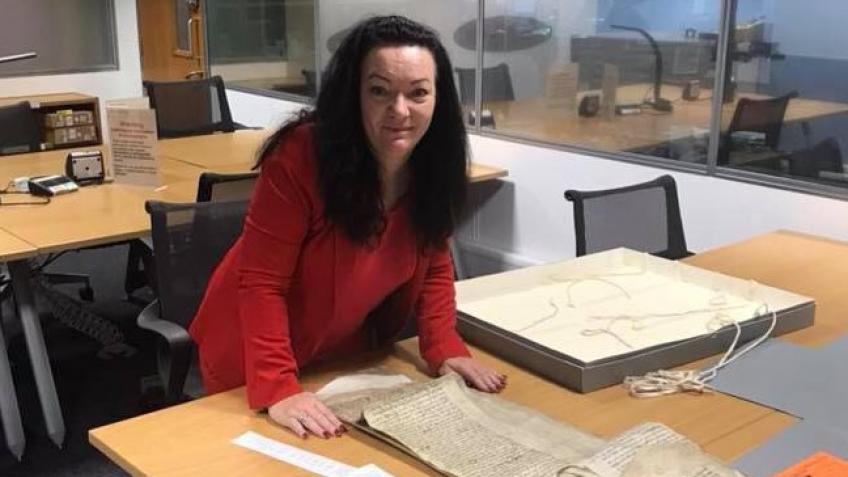
I am raising £4,500 to fund tuition fees for one year of my PhD research into the Tudors and Disability. I am a disabled historian.
I've already been accepted as a PhD student at Manchester Metropolitan, to start this course in September.
The aim of my PhD course is to discover untold narratives of ordinary disabled people during the Tudor period bringing them firmly, front and centre, amongst mainstream history where they are entitled to be, using case studies from the cities of York, Norwich and London. The disabled person has a long tradition of being left out of studies in history. This PhD will look at their response to living in families, communities, and cities, and sometimes-altered life at court. However, despite the growing number of works concentrating on natural fools of the Tudor Court, there is as yet no study of ordinary disabled people portrayed in narratives writing about their own experiences in cities in Tudor England. This is a notable omission as disabled people and their experience of life, and the way that this was portrayed tie into questions about charity, philanthropy and chastisement and the changing care of disabled people in relation to the church, and the English Reformations.
There is little understanding of how the ordinary disabled person was perceived or portrayed in Tudor England, or what that tells us about their experience of life, and what impact Tudor society had on them either physically, socially, or psychologically.
To address this clear gap in the historiography, this doctoral research project will analyse representations of disability in Tudor literature from the start of the Reformation in 1517 to the end of Elizabeth I’s reign in 1603 to address the following questions:
1. How were disabled people affected by their disability?
2. What do idealised portrayals of disabled courtiers tell us about the royal courts in which they served?
3. Are the experiences of disabled people valued, and their wisdom shared?
4. How are disabled people portrayed depending on the nature, theatre, and comparative success of their lives in society?
5. What do Tudor disabled people, and those who write about them, omit from their accounts, and why?
This seemingly straightforward yet fundamental study of Tudor disabled people will survey how the experience of disability changed from the charity of religious houses and monasteries to living in families and communities, to life at the royal courts. The scope of reference to York, Norwich, and London allows for analysis over a spectrum of Tudor life in England which can be compared and contrasted to understand how and why disabled people experienced life during this short period. This range also allows for the discussion of three distinct Tudor cities, with religious orders in Cathedrals, and how they cared for the disabled, against a narrative of disabled people living with their immediate families, to them experiencing life in royal courts in London, under both a political and religious sphere. These comparisons will considerably enrich our understanding of disability experiences in the Tudor period and will transform our understanding of the ways in which disabled people were portrayed and understood. The proposed project will avoid the periodisation seen in works focussing on disabled people portrayed in sixteenth Century Shakespearean drama and allow for consideration of the impact of success or failure in both ordinary and royal communities where they lived.
Disability history has been limping along, as a second-rate area of study. Firstly, as a researcher, I can build on my skills learnt through previous studies as a historian, and the PhD will enable me to have a career in academia and heritage focusing on bringing disability history into the mainstream. This PhD will also mean as a historian it will mean I will be taken seriously. The PhD will open avenues and opportunities to explore public engagement. This PhD will enable me to build on the research I have started when I wrote Disability and the Tudors: All The king’s Fools, which is due to be published by Pen and Sword Books in November 2021, and will open up the conversation between academic works, and public engagement. This PhD will enable me to develop further as an academic researcher and I hope to bring this research into the mainstream through heritage sites, the media, and television.
It is said that history is written by the winners – it is forgotten that history is re-written over time – transformed by books, re-invented by those who did not live through it. Yet, the existence of disabled people has been woven through the tapestries and popular narratives throughout history. Disabled people were never seen as ‘winners’ or victors, so our history over time has been hidden in plain sight – ignored, untold, and viewed as insignificant. Disability history is an important topic to debate, research, and publish because such study directs its readers towards a general reclamation of our British history which rightfully includes its disabled participants. Disability history is important to address specifically because the subject is often viewed as taboo, and as such, has, and still is often obscured from public view., understanding, and awareness. Disability history deserves to be included in mainstream history. Yet, academics and researchers continue to treat disability history as a last-minute subject, something that they can ‘add-on’ to their research to be ‘on top of the trends in academia. Sadly, this ‘trend’ in studying minority histories does a disservice to those disabled people we study, research and write about, wherein disabled people are seen equally as part of humanity, giving us a different perspective on what it means to be human.
I was compelled to study disability history as I am a disabled person experiencing disability every day being born prematurely at 26 weeks and being diagnosed with cerebral palsy.
A usual PhD is between £16,000- £20,000 per year. I am hoping that crowdfunding can secure support for at least the fees of my first year of tuition at Manchester Metropolitan University.
- The funds will not cover living expenses, travel costs and research trips or attendance at key conferences.
- Any extra funds generated will be used to cover research trips.
- It would have been great to ask for support for research trips and living expenses in the first year, but I feel that this is unrealistic.
The PhD project when completed will hopefully change the conversation around disability, discrimination and how narratives of the past can inform the present and change the future for disabled people. That is my wish, to normalise the discussion around disability, and to change attitudes towards it.
This project successfully funded on 4th June 2021