
Aviva Employee Giving provided £600 of match funding
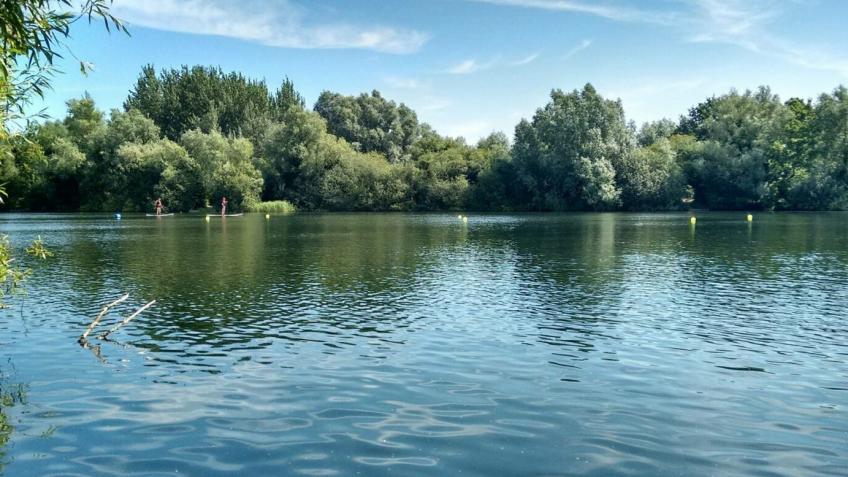
Our project will deliver enhancements to an important wetland habitat in Milton Country Park, boosting the site for nature and local people.
We are requesting funds to purchase new tools and equipment that will allow our team of conservation volunteers to deliver targeted enhancements to an important wetland habitat in Milton Country Park.
In common with many other flooded gravel pits, the extensive complex of open waters at Milton Country Park are underrepresented by marginal habitat that is in good condition, limiting the diversity of wildlife at the park. By far the largest existing area of marginal vegetation at Milton Country Park lies within a former gravel pit, which has received minimal intervention over recent decades. In the absence of management, areas of former wetland reedbed have succeeded to willow scrub and dry, overmature reedbed. Areas of standing water are much reduced compared to its previous extent and are anoxic for much of the year due to the surplus of decaying organic matter.
Milton Country Park location lies within a Natural England priority target area for great crested newts, and is also only 1.8km from an RSPB Turtle Dove Zone – both of which are UK BAP Priority Species that require access to healthy wetland ecosystems to thrive. Therefore, the wetland management interventions proposed through this project will be tailored towards the habitat requirements of these two flagship species, but with the broader aim of supporting a wide variety of wetland species.
Specifically, to improve the quality of the park’s marginal wetland habitat, and to boost the quantity of wildlife it sustains, our volunteers will be led in undertaking the thinning of scrub and willow shrubs within and along the periphery of the reedbed to open up sunlight and sightlines to the wetland. Targeted scrub removal at strategic locations along the western and southern boundaries of the pit will open up a more attractive vista of the wetland for park visitors using the existing footpath network, and will begin to reverse the wetland’s succession into a woodland. Wetlands are most biodiverse when they are not heavily shaded by trees, as this allows a variety of aquatic plant species to thrive, which then provides food and cover for other species such as newts. Care will be taken throughout the scrub thinning process as many birds require woodland scrub for nesting and foraging. Therefore, a varied age structure in the scrub and trees will be left. Taller scrub will primarily be left on the north side of the wetland - this will provide ideal turtle dove (and nightingale) nesting habitat without casting too much shade over the water. Any cut material will be retained and piled up, as deadwood provides good habitat for fungi and invertebrates, and can form over wintering habitat for great crested newts. Willow screening will be used strategically to reduce disturbance for important wetland species. Targeted scrub removal within the reedbed will further boost the site's value for species such as turtle doves, which will be able to access open wet areas that are distinct and distant from scrub and tall vegetation.
Aviva Employee Giving provided £600 of match funding

Save Our Wild Isles Community Fund provided £540 of match funding

Solus Employee Giving provided £30 of match funding
This project successfully funded on 6th December 2023