Target reached!
Expand to include more women!
Expand to include more women!
With a local friend living in Lunsar, we are going to provide small business loans for local woman to start small market businesses/farming
Sierra Leone is a happy, welcoming place which has a sad and complex history of civil war, exploitation and tragedies such as Ebola. Despite being one of the poorest countries in the world, the people are ambitious, cheery and genuine.
I went to Sierra Leone off and on for a couple of years for work and eventually ended up staying to live there for a bit. I met some amazing people - one of which was Karim. As a keen cyclist, I got to know Karim when I heard he had the best bike shop in a near by town - Lunsar. Since first knowing Karim all those years ago, he has developed a successful bike shop and business and spends his spare time supporting his local community and other cyclists who are trying to set up their own bike shops and repair businesses. He has a warm, kind heart and good business sense and experience and I trust him completely - we have worked on projects together in the past.
The idea
Together with his wife who recently completed a business course at college, Karim has developed the idea to provide micro loans for local women who are widows to start their own small business - to sell something small in the market or start growing/farming specific local crops they can sell in the market. This grant of 2million SLL$ (about £200 per person) would be provided in stages to each woman, along with business support such as checking in, sharing information and training about saving business earnings etc.
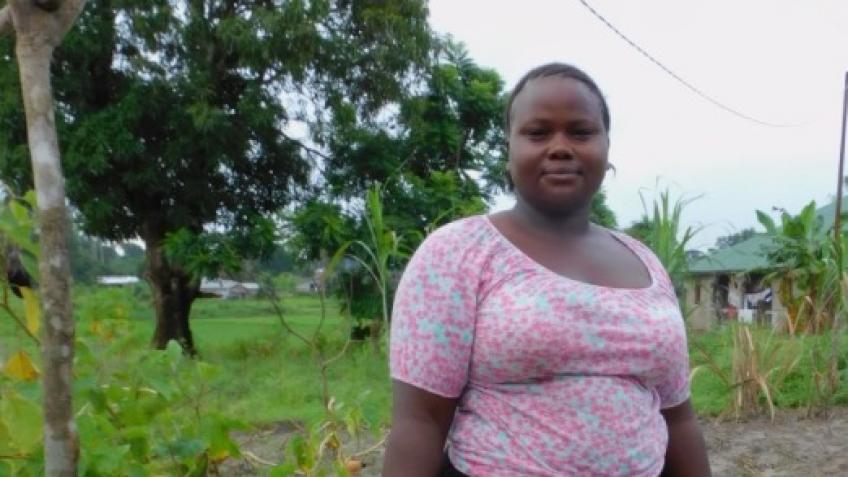
Currently Karim has identified 20 women who would be suitable for this pilot project (including Fatima pictured above). His idea for the future is that funders could either decide to get a return from their investment in the start up capital, or choose to reinvest it. The reinvestment would then go to more micro loans or be used in less sustainable projects in the local community (such as the child feeding programme Karim does himself every year at the end of rainy season when many children are very hungry and food is scarse). The idea that these one-off projects being supported with the interest from the loans in itself makes them more sustainable - a win win!
In a country with historically low gender equality, the idea is that with being able to create a small amount of income - which is even harder as widows so have no other care giver to support their family. The women will be able to have more stability and this income will have a positive knock on impact, hopefully increasing the chance of their children being able to attend school, access medical care, avoid malnutrition and much more.
Anyway - at the moment Karim and I are trying to raise £4000 to be able to to give 20 women in Lunsar the opportunity to start their own business. After this initial pilot, we'd hope to be able to report on the success and continue raising money for this amazing cause.

Some FAQ/More information from Karim
Who will hold the money/how will investors know it is ‘safe’?
The money can go directly to the bank and this will ensure that all recipients receiving money from loan officers and manager can receive a cheque which will then give them accesses to the money after passing all protocols and documentation.
What is the timescale for each business to show success?
The timescale would be in two categories, one will be for the widows which can last for six months and the other one can be for low income workers which we call salary loans. Salary loans can last for three months or six months and the interest rate is different from the widows women.
Who are the women and their business plans (eg Fatima plus another two or three)?
The widow's business plans will be shared and discussed at the first meeting we hold with them. For example - Fatima has the plan to plant some vegetables and crops which she believes she can harvest and sell in the markets over 3 months. After that meeting our loans officers will go and make a survey to their business area and even take photos. NOTE: We will not a single loan to anybody until they come with a group of three to five widows. This will create a collective responsibility between a small group and ensure everyone is committed to repayment. The group will sign a loan agreement which commits to the others in the group, that if one person goes missing or passes away suddenly, the rest can pay this money.
Would Karim/his wife charge a fee for the ‘management’/business advice?
Karim will be as an auditor and his wife can be as a manager and work with two loan officers. At the moment all the staff will received a small stipend because we're not going to make enough to pay salaries.
Are there any local laws controlling the provision of loans to protect the borrowers?
There are some strong local laws and community commitments which we will include in the agreement.
If you have any other questions please do send us a message. Thank you!
This project successfully funded on 6th April 2021