Michael Abbensetts - Legacy and blue plaque event
London, Greater London, United Kingdom
Aim
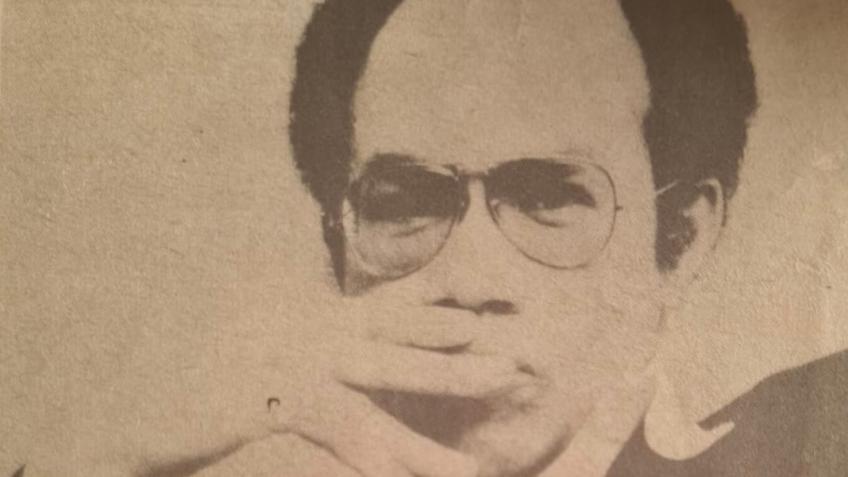
To celebrate Michael Abbensetts & build a lasting legacy of his work & its impact, around the unveiling of a commemorative blue plaque.
The family of Micheal Abbensetts wish to honour his life achievements as author, playwright and screenwriter and the impact and legacy of his work in fairly representing Black people and communities in theatres and on TV - while paving the way for other Black creatives and indiviuals in the creative arts industry to take on positive roles.
The mission is to raise awareness around the event of his commemoration with a Nubian Jak blue plaque at the home where he lived in Kilburn, London.
Family have borrowed funds to secure the blue plaque going ahead. A follow on reception will be held directly after the event for a limited number of attendees. This will be held at the Kiln theatre (was Tricycle), much loved by Michael and where some of his work was performed.
A limited edition commemorative brochure publication would also be produced to be available on the day.
The event is to host and encourage discussion about the legacy of black people and communities who have been positively impacted and influenced by Michael's writing.
We will do this by inviting producers, directors, actors, writers and other practitioners in the creative arts to talk about his legacy and consider how to take this forward. This includes a conversation about an archive of his collection of photos, theatre programmes, posters, newspaper clippings personal notes and correspondence. How do we preserve this as an accesible and useful resource for future generations?
Born in Guyana in 1938 , Michael Abbensetts migrated to the UK in 1963 and became a British citizen in 1974. He is credited as being the first black British playwright to be commissioned by the BBC to write a series . Empire Road ( 1978-79), which despite its success , ran on the BBC for only two seasons , and was the first Black drama series to be screened on British television . Nothing of its kind has been screened since then.
Abbensetts was born in Georgetown into a middle class Guyanese family of mixed heritage that included African and European antecedents. His father , Neville John Abbensetts , was a doctor, his mother Elaine was a homemaker. He attended Queens College Secondary School ( 1952-56 ) before moving to Canada, where he went to Stanstead College in Quebec and later studied at St George Williams University, Montreal (1960-61 ). Inspired by a performance he saw in Canada of Look Back in Anger, by John Osborne , he decided to become a playwright .
When he arrived in Britain in the early 60s there weren't many black playwrights. Ambitious and mindful that his decision to become a writer and not a doctor or lawyer had disappointed his father , he was determined to get his plays put on . His first play, Sweet Talk was staged at the Royal Court in 1973. Abbensetts had worked briefly at the Tower of London as a security guard and translated his experiences into his play , The Museum Attendant , which had both black and white characters . Critics recognising that he ' could write white as well as black characters ' began to take notice of his work.
Abbensetts was asked by a young producer, Peter Ansorge, then beginning his career at the BBC, if he had any ideas for a TV series. He came up with Empire Road, which was set in a fictional location based on his experience of living in Birmingham. The lead characters, played by Norman Beaton (Guyanese) and Corinne Skinner Carter (Trinidadian) were styled on an uncle and his wife.
Although it was considered a Black version of the long running British Soap Coronation Street, Empire Road with its fully black cast was making a statement about the lack of Black people on British TV.
One of his most successful TV dramas, Black Christmas (1977) advanced questions of belonging and redefining cultural space by exploring the consequence of mental health as experienced by black people trying to adapt to life in Britain. In writing this drama, Abbensetts once said he “wanted to deal with the fact that there are some Black people in our society that we don’t seem to talk about.”
Michael died in 2016, at the age of 78. This year marks his 85th birthday. The commemoration of a Nubian Jak Blue Plaque is a timely tribute to Michael Abbensetts for his outstanding contribution to British Drama, and literary representation of Black British life by an A -list of actors such as Norman Beaton, Carmen Monroe, Janet Bartley, Corinne Skinner Carter, Joseph Marcell, Wayne Laryea, Don Warrington, Rudolf Walker among many more, and inspiring younger generations of Black actors and playwrights.
This project successfully funded on 6th August 2023