Target reached!
Extra funding would enable us to conserve and digitise more images, and support the ...
Extra funding would enable us to conserve and digitise more images, and support the ...
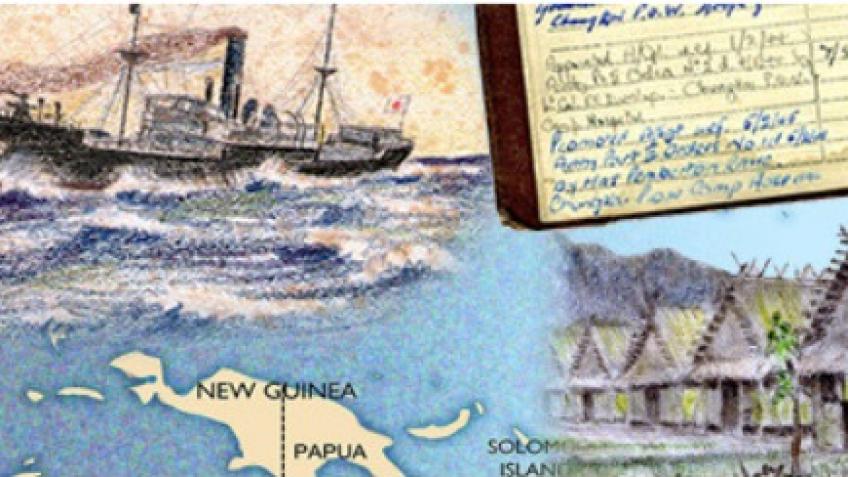
To create a public exhibition of WWII Far East Prisoners of War (FEPOW) artwork, that was created in captivity documenting their experiences
Over 50,000 British servicemen became FEPOW, having been captured by the Japanese between December 1941 and March 1942. FEPOWs were subjected to years of neglect, malnutrition, disease and slave labour, resulting in death rates of nearly 25%. Many returned via Liverpool following their time in captivity and were treated at LSTM. This was the beginning of a relationship that was to continue for over six decades.
Whilst incarcerated, some FEPOWs used art as a means to document their experiences in the camps. The production of this art was risky, as keeping any form of records was strictly forbidden. It was also an important coping mechanism for many FEPOWs. The fact that some of it survives today is testament to the ingenuity and resilience of the FEPOWs, and their determination to preserve this important element of history for future generations.
Through LSTM's longstanding relationships with FEPOW families, we have identified a number of previously unknown descendants in whose guardianship lies a remarkable collection of previously undocumented artwork.
Our vision is to bring this hidden heritage to the public through an exhibition in 2019-2020 (coinciding with the 75th anniversary of the end of WWII), in partnership with the University of Liverpool's Victoria Gallery and Museum.

Medical staff huts, Changi Gaol camp Singapore, July 1945, drawn by Capt Thomas Wilson RAMC medical officer, Singapore and Thailand.© Wilson family
“Charlie” Thailand 1944, watercolour portrait by Private Ashley George Old, 5th Sherwood Forresters; ‘this is what the Japs did to us’ A. G. Old 1984, © Bartholomew family
This project successfully funded on 9th November 2018