Target reached!
Thank you so much for helping us reach our original target; every additional penny r...
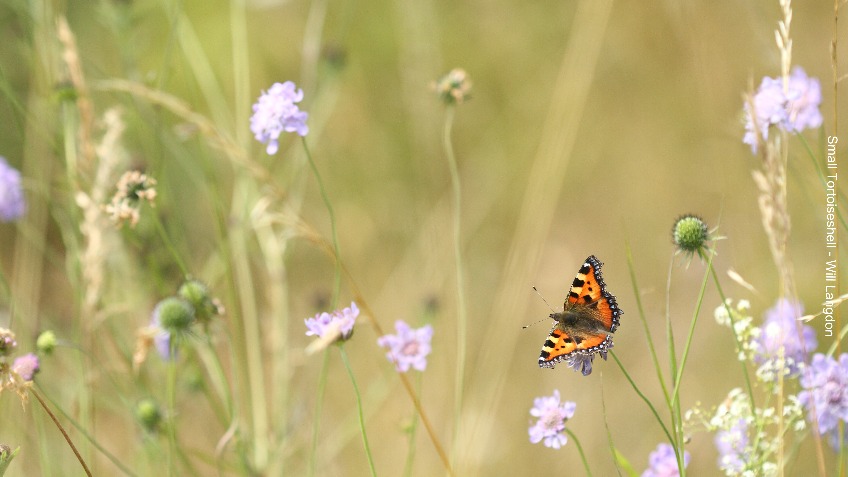
Thank you so much for helping us reach our original target; every additional penny r...
This is YOUR opportunity to contribute to a positive change for all wildlife! Please pledge today.
A recent study has found evidence linking the use of a new type of pesticide (Neonicotinoids) with the disappearance of butterflies in the UK.
In light of this shocking discovery Butterfly Conservation urgently needs your help. We must carry out more detailed analysis to find specific proof that these chemicals are responsible before we can persuade the Government to review their use.
Our Butterflies are disappearing. Five species of butterfly have become extinct in the last 150 years and over three quarters are declining. The problem is particularly acute on farmland where numbers of widespread butterflies have declined by 58% in England over the last decade.
For the first time a scientific study has found evidence that Neonicotinoid (Neonics) pesticides could be a threat to butterflies.
The study, by Stirling University in association with Butterfly Conservation and others, found an extremely close link between populations of widespread butterflies that commonly breed on farmland and the total amount of Neonic pesticide being used in the UK each year. But it only shows a strong correlation between increasing use of Neonics and butterfly declines, not a proof of cause and effect.
In the USA, there is growing evidence that these pesticides are killing Monarch butterflies, because Neonic residues are getting into the milkweed plants that often grow in disturbed ground around arable crops. The same phenomenon could be happening here in Britain - we must find out!
Neonics are a new type of highly toxic chemical which acts a nerve agent for insects. Neonics were introduced in the mid-1990s and are now widely used on crops such as cereals, sugar beet and oil seed rape. They are also sold for use in gardens, so many gardeners may be unwittingly adding to the problem.
During the last few years evidence has shown that Neonics have been harming bee populations and killing other insects in habitats in and around affected farmland.
Neonics stay in the environment; they reach all parts of the treated crop plant including pollen and nectar, as well as spreading into soils. They get into water courses and adjacent habitats such as field margins and hedgerows where many insects breed. There is even evidence that they spread into pollen and nectar in wildflower strips, purposefully sown around arable fields to help pollinators such as bees and butterflies. Pollinating insects play a vital role in our ecosystem and without them our environment and agriculture will suffer.
The pesticides were banned by the EU for two years for use in flowering crops as a precaution while more evidence was gathered. However, they are still used widely in cereal crops. It is vital that we urgently gather sound evidence before we can argue for their use to be reviewed.
Donate to our research fund and help us gather the evidence we need to show whether Neonics are a serious threat to butterfly survival.
Your donation will enable us to undertake specific analysis of Butterfly Conservation’s monitoring data to provide more convincing evidence of cause and effect.
Read more about the report on the Butterfly Conservation website
This project successfully funded on 21st December 2015