Improve our village smallholding
Bakewell, Derbyshire, United Kingdom
Aim
Help us add polytunnels, fruit cage and create a better enclosure for our flock, so that we can provide a better service for our community.
A little background
In October 2019, my wife and I decided that we would like to start living a more self-sufficient life, get more exercise and teach our 2 daughters about where food comes from and hopefully encourage them to eat more vegetables. So, we started a small allotment on some private land which is a 20 second walk from our house. We began clearing it over the winter, but when lockdown hit in March 2020 it became our little sanctuary and as a family, we became hooked. In February 2021, the rest of the land surrounding our allotment became available. We couldn’t resist grabbing the opportunity and our small allotment suddenly turned into a micro small holding (approx 2/3rds of an acre) with the potential to turn into a small market garden providing fresh fruit and vegetables to residents (and visitors) of our small Peak District village.
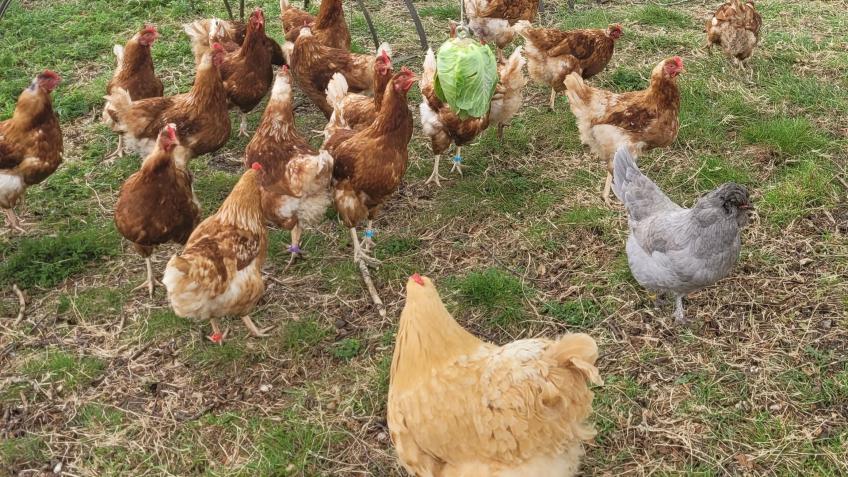
We quickly decided to add laying hens so that we could sell eggs. We started with 24, but the popularity of the eggs has seen us raise the flock number to 60 in less than a year…and it’s still not enough.
The fruit and vegetables we were able to grow and sell in 2021 were enjoyed by everyone who bought them, but we were limited on what we were able to grow, due to lack of indoor space. We did try tomatoes outside but unfortunately lost all 48 plants to blight, just as they were starting to ripen.
Permaculture life
We use permaculture methods where nothing is wasted, and everything has a purpose (in some cases multiple purposes). A few examples of this are:
- Chickens
- Fresh eggs
- Manure is used for fertiliser for the fruit and vegetables beds
- Clearing vegetables beds at the end of the season (chicken tractor)
- Compost - We built a 7-bay compost system which is loaded up with
- Garden waste (that we can’t feed to the chickens)
- Used chicken bedding full of their manure
- Raw kitchen scraps donated by our immediate neighbours (we leave a food caddy by our front door)
- Worms – we have a small worm farm which gives us:
- Worm castings – for mixing with seed compost
- Worm tea – liquid fertiliser
- Extra protein for the chickens giving brighter yolks
We also use all the nettles to produce nettle tea, which is a fantastic liquid feed for leafy green vegetables
Over the next year (or two), we hope to add:
- Ducks - which can be trained to hunt out slugs and other pets around the market garden
- Pigs – to help clear and fertilise areas as we need them to and provide us with meat. We are not looking to sell meat at the moment, so would be purely for us as a family.
- Quail – for eggs to sell and meat for ourselves
- Rabbits – mainly as pets for our daughters but could be used to help clear some vegetables beds.
- Bees – we have been getting advice from Bee Safe Supplies on potentially adding a couple of hives to the plot. This would give us fresh honey so sell, increase pollination on the fruit and vegetables which should increase yield and the bees wax that will be used to make lip/body balms, candles, etc.
- Pond – for ducks and to encourage other wildlife
- Wildflower/botanical beds – bee/insect friendly areas to encourage pollination of the fruit and vegetables. The botanicals will also be used in a range of natural beauty products that we are currently developing.
We have an open gate policy and everyone is welcome to come and have a wander round to see what we are doing and we put out small bags of feed at weekends for visitors to feed the chickens. The above will not only improve productivity on the site, but also add a greater variety of animals for the visitors to see and possibly handle.
Big Plans - Why we need funding
As well as lots of smaller projects around the site, we would like to:
- Build a larger chicken enclosure and add more hens – our hens normally free range in the front area of the plot (away from the growing vegetables) but they have had to be closed into a 40m2 enclosure because of bird flu, since November 2021. After 2 winters of bird flu restrictions, we have realised that the enclosure we have is just not big enough for the 60 birds we have, and we need to think bigger. We would like to build a 220m2 enclosure which would give them plenty of room and allow us to add more hens to keep up with egg demand. Up to 150 birds. Approx cost £5,900.
- Add 2 polytunnels – the polytunnels will allow us to grow a greater variety of produce and extend the season. The larger of the 2 polytunnels would also double up as a winter home for the chickens. While they are in there, they will clear, rake over, and fertilise the ground and the polytunnel will keep them warm which should result in higher egg production. Approx cost £9,000
- Build larger fruit cage – we currently have a 5m x 3m fruit cage (which has seen better days) and struggle to grow enough fruit to sell as our girls tend to eat it all as soon as it is ripe. We have selected an area that is 13m x 7m which will allow us to drastically increase our soft fruit production. Approx cost £1,100
Our community
Since we have started this venture a year ago, we have met more people in our community than we did in the previous 5 years of living here. We sometimes spend a large portion of the day stood at the front gates chatting away to everyone as they walk past or pop in to buy some eggs. The whole village has taken such an interest in what we have been doing and achieved so far. We would like to offer more to our community and over time this will include:
- Seed swap – a small cupboard where locals can come and donate any left-over seeds for someone else in the village to use. We hope this will encourage people to grow a greater variety of plants in their gardens as they would not need to buy as many packets of seeds. Simply take a pack, sow a few in your garden/greenhouse and bring the rest of the packet back for someone else to use.
- Gardening book lending library – an extension of the seed swap would be to add some gardening books (hopefully donated) that locals could borrow or use for reference.
- Working with the local primary school - by inviting them to bring the children to the site – one class at a time - to learn more about permaculture, how to build wildlife hotels and encourage insects into their gardens, etc and meet our animals.
- Sunflower Competitions – our girls have a competition between themselves, each year, to see who can grow the tallest sunflower. As part of inviting the school to bring the children, we would get each child and teacher in the school to sow a sunflower and mark it with their name. At the end of the year the tallest sunflower will win a prize. It is just for fun and will look quite striking from the main road seeing 100+ sunflowers.
Longer term
Further down the line, we would very much like to encourage more children to get into gardening by starting a kid’s gardening club at weekends. We have also considered the possibility of inviting residents from our local care home and groups of adults with learning difficulties to come and do some gardening, have a wander around or just sit and enjoy watching the animals. This may not be possible as we do not have toilet facilities on site, but hopefully we may be able to organise something in the future.
We would also like to start growing flowers and bedding plants to sell.
Thank you for taking the time to look at our page.
Allen & Nicola
This project successfully funded on 28th March 2022