
Martin Bright
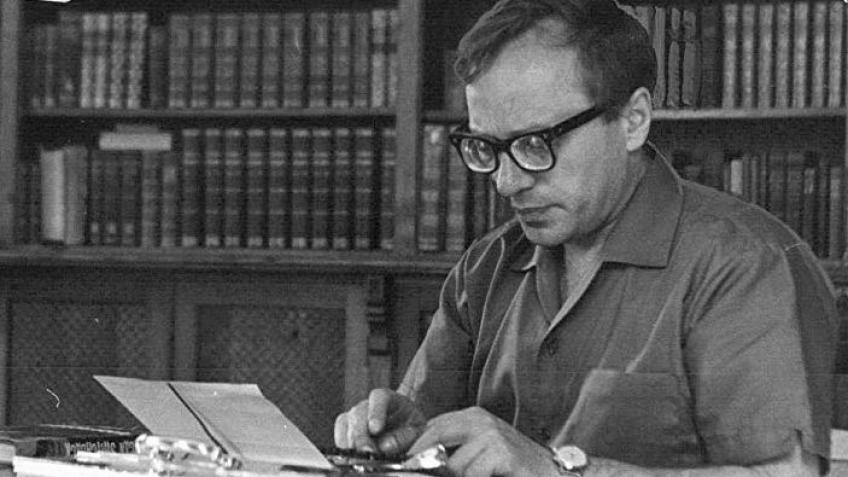
12th July 2022Anatoly Kuznetsov: the lost legacy
I was sifting through the Index on Censorship archive and came across a fascinating piece on Kuznetsov from 1981, two years after the writer died in London. The article, written by film critic Jeanne Vronskaya, discusses two films adapted from Kuznetsov short stories in the 1960s: We Two Men and Dawn Meeting. Each, in very different ways, was destroyed by the Soviet censor.
The first was a slice of classic 60s neo-realism about a drunken driver who reassesses his life after an encounter with an orphan. The film showed gritty scenes of rural life and included real country people as extras. The film initially avoided the attention of the authorities and was due to be celebrated at a gala screening during the 1963 Moscow film festival. But, on the day of the screening, the film was pulled. Kuznetsov characterised the attitude of the Communist Party to We Two Men as follows: "How can we represent the USSR with a picture that shows women dressed in terrible headscarves, snotty-nosed children, rough roads, privately owned geese, illegal private work, and without so much as a mention of the leading role of the Party?"The film was shelved and a more suitable example of Soviet film making shown in its place. (By way of a sidenote, Fellini’s 8 1/2 won the gold medal at the festival, although the great Italian director’s masterpiece was never distributed in the Soviet Union).
The second attempt at adapting a Kuznetsov story was even more of a fiasco. Dawn Meeting was the story of a milkmaid struggling to survive in the collective farm era and build a better life for herself. When the censor saw the film, cuts were demanded to make the film more upbeat and patriotic. When Kuznetsov saw the final result he was horrified: “I sat there watching a film that was completely strange to me: about the raising of the standard of living in a progressive, prosperous collective farm, first class houses, excellent clothes, collective farm songs from Moscow Radio's record library, fields heavy with wheat, and happily smiling collective farmers all over the place.“ In a final twist, Dawn Meeting was on billboards all over Moscow when Kuznetsov fled for the UK in 1969.
If these short stories are half as good as Kuznetsov’s masterpiece, Babi Yar, then they deserve a wider readership and it would be intriguing to see whether the film of We Two Mens stand the test of time.