Red Threads Eco-Wraps
London Borough of Lambeth
Aim
Eco-Wraps are a hand-made, green friendly sanitary product brand aimed at those who experience menses, postpartum issues or incontinence.
Eco-Wraps are a hand-made, reusable hygiene product brand.
Talking about such gory times as a woman's menstrual cycle, Incontinence and Postpartum issues have been a long-standing taboo. This is why there are so many underlying issues that haven't been addressed - yet it isn't something that goes away just by not talking about them. Something else that doesn't go away is poverty. What I aim to do is provide green conscious, reusable sanitary pads - worldwide. As well as making these products accessible to those on low or no incomes, these pads will also be environmentally friendly as they can be reused time after time eliminating the waste that comes with the pads and tampons of today.

More Than One Use
Every year billions get spent on pads and tampons that end up in the sea and in landfills. This is a problem because many manufacturers use up to four plastic bags in the production of towels and tampon applicators and these are not biodegradeable, which means that they will never break down into the earth like paper, plants and certain man-made materials can. Looking at the statistics for the USA alone, can you imagine the amount produced by the whole world.? But sanitary products are one of the main staples in a woman's life that we can't live without (even before the eye liner to make your eyes pop and the mobile phone to keep the social media world updated on your every move).
Mum or Gran or Daughter Is the Word
Incontinence can affect anyone at any time of your life - it doesn't just have to be age related. Many pregnant woman experience a kind of incontinence called Stress Incontinence (SI) that comes about when the unborn infant is resting against the bladder which can sometimes cause urine leakage for the mother. Sometimes this will carry on until even after the baby is born and will be a result of weakened pelvic floor muscles, shifted bladder and / or nerve damage. Postpartum mothers will often find that they bleed after child-birth and that this can last up to 6 weeks resulting in having to change pads between 6 and 12 times a day until it stops. The most well-known cause for incontinance is body wear and tear. As you get older the muscles in your body start to lose elasticity and may end up in a loss of bladder control. Your body mass may also have the same effect on your body - The more strain there is on your muscles the weaker they get.
#FirstWorldProblems
In the western world, one of the biggest problems we face is what brand of product to use. In some parts of the world this is the least of their problems. There are thousands of girls a month that can't go to school as they can't afford to buy sanitary towels or even, in some cases, underwear. Time is taken off of school which may cause other problems for them and their relatives due to the fact that they may have paid to go to school (which can be very difficult, or untraditional, for some families to provide for their young women) and they miss out on a key piece of learning from being off school for up to a week. In the countries that can afford disposable menstrual products, there is the underlying issue that there is nowhere to put them. In such places as shanty towns, sometimes there aren't even toilets or there may only be one for the whole street and these, still, don't have working plumbing. Many of the used pads in these situations are just disposed of in the gutters and at the side of the street, and as you can probably picture, is very unhygienic and in the heat lets of a potent smell.
What Makes You So Special?
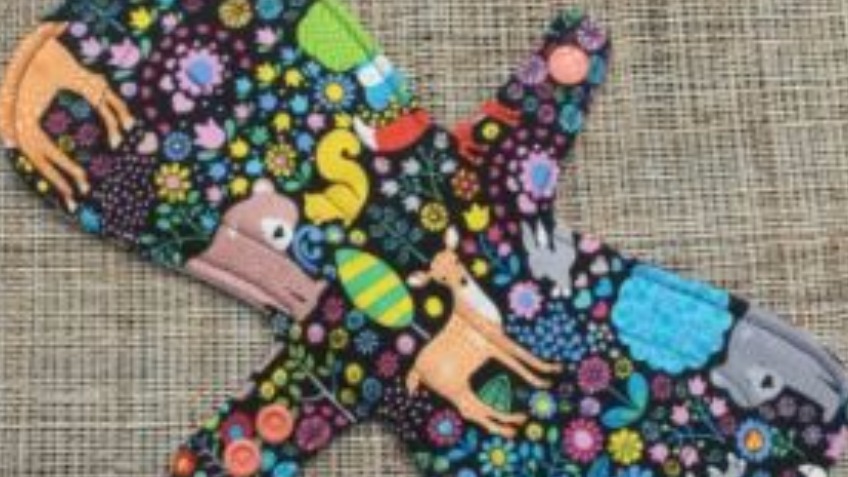
Red Wraps have been designed to be green conscious. They are reuseable so they last longer than other pads. Red Wraps are made to last years so as to save you money as well as the environment. They are made from cloths such as
- Cotton or flannel (for a top layer) - This creates a breathable, soft , knickers like feel against your skin
- Polar fleece / Zorb/ Hemp / Microfibre (Absorbable core fabric) - This makes sure that all liquids are locked in to keep you dry. Do not forget Hemp is organic so it's a completely natural material.
- PUL or Synthetic Fleece (backing layer) PUL is a fabric made from polyester or cotton that is coated with a thin layer of waterproofing. It is good at stopping the pads from moving around in your underwear without the use of harsh glues and adhesives.
These pads are held in place by buttons or poppers.
The pads and wetbags are extreamly cost effective as they only need to be replaced every few years.
To clean them only takes a few simple steps
- Rinse with water and a mild, unscented soap
- Chuck in the washing machine or continue to wash by hand
- Leave to dry fully before next use
How Are We Going To Make This Work?
Pads can be purchased individually or as a set. There are 3 different kinds of set.
- Light Set - This set is designed for light and medium flow days and incontinence
- Heavy Set- This is designed for medium to heavy days, incontinece and postpartum
- Mixed Set- This is designed for all situations
Each set contains 6 pads. 6 pads is the ideal amount for the minimum of a day. Most people tend to use 6 a day and wash them at night for use for the next day.
Each complete set comes with a wet bag. Wet bags are used to store used pads until they can be washed. They are made from a waterproof material so as to minimize mess. Wet bags will also be for sale separately. These can be made with one or two pockets and can be wiped clean then left to air dry.
For every set purchased we will donate a free or a low-cost set to someone in need anywhere over the world. We intend to network to the places that need them the most to the people who need them the most. This not only includes those with no income, it also reaches out to people on low-income.
How We Will Use The Funds Raised
If we get the backing we need, we will use the money to pay for materials to make the pads and wet bags, packaging and for promotional materials. We will also use some to help us for further networking and exposure or setting up the pop-up locations and events where we will distribute pads to the public. Another thing we intend to do is run workshops to educate customers on the benefits of switching to reuseable towels and even to teach them how to make their own if they are not able to obtain any from our business or if they would like to make some of their own.
What Are The Risks?
There aren't many risks. The success of this project is reliable on the target market being willing to try something different.
If we do not make our target goal, we will use the money to buy materials to take into different establishments (e.g schools, womans refuges, hospitals) and run workshops on how to save money by making your own pads.
This project closed unsuccessfully on 5th May 2016